Denali vs Warn vs KFI: Which ATV Plow for Paid Work
Not all ATV plows are created equal; discover which brand reigns supreme for subcontractors and why your choice could impact your bottom line.
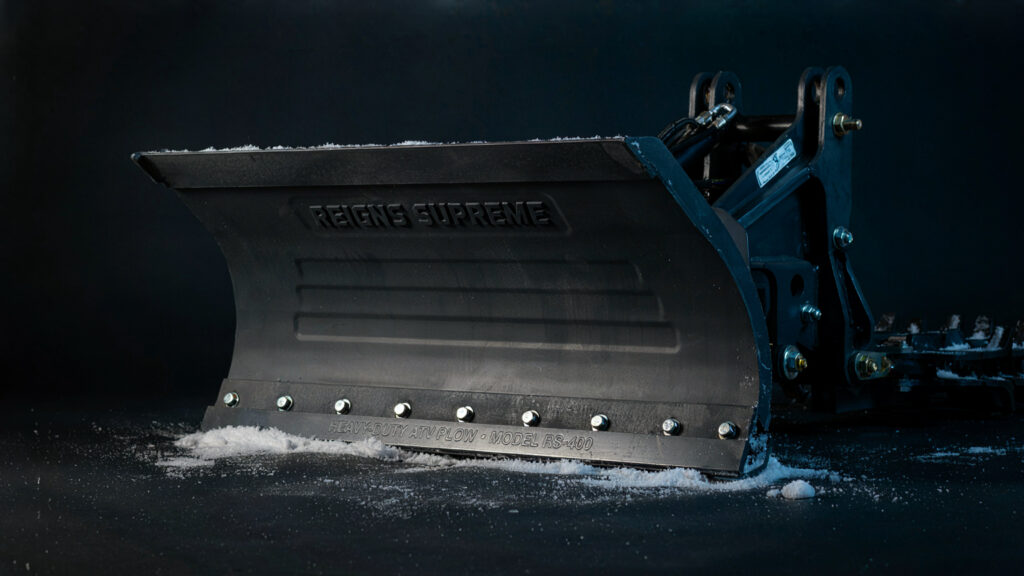
KFI, Denali and Warn cover the same job from three different price points, and the specification gap between them is narrower than the price gap. For a subcontractor running a quad or side-by-side on driveways and small lots, the choice comes down to steel thickness, how the blade angles, and what is included before you start buying accessories.
Side by side
| KFI | Denali | Warn ProVantage | |
|---|---|---|---|
| Blade steel | 11-gauge | 11-gauge | 12-gauge with heavy ribbing |
| Lift | Winch-driven | Winch-driven | Winch-driven |
| Angle adjustment | Optional hydraulic actuator | Side-to-side actuators included | Model dependent |
| Included wear parts | Varies by kit | Wear bars and skid shoes included | Varies by kit |
| Impact protection | Trip springs | Trip springs | Trip system that stops the machine on a solid strike |
| Positioning | Balance of price and durability | Value | Premium build |
The gauge number is not the whole story
Lower gauge means thicker steel, so KFI and Denali’s 11-gauge moldboards are heavier stock than Warn’s ProVantage 12-gauge. That looks like a straightforward win until you account for construction: Warn adds heavy ribbing behind the blade, which resists the twisting loads that actually deform a plow, and does it at lower weight.
Weight matters on a quad more than on a truck. Everything hanging off the front is unsprung mass on a light machine, and it affects steering and traction on the surface you are trying to clear. Thicker is not automatically better here.
Angling is the feature you will use most
Every one of these lifts on the machine’s winch. The difference that shows up daily is how the blade angles. Denali includes side-to-side actuators so the angle changes from the seat. KFI offers a hydraulic actuator as an upgrade rather than standard.
If your alternative is climbing off to pull a pin every time the windrow needs redirecting, powered angling is the single upgrade most owners say they would buy first. Price the plow with it included rather than comparing base kits.
What is in the box
Denali kits commonly include wear bars and skid shoes; on other brands these are frequently separate purchases. Wear bars are the consumable that protects the blade itself, and skid shoes are what let you run over gravel without digging in. Compare fully-equipped prices, not headline ones — the gap narrows considerably.
Which one for subcontract work
Category reviewers consistently place Warn and KFI highest on build quality and owner satisfaction, with Denali competing on price (J.D. Power).
- Highest utilisation, paid work every event — Warn, for build quality and the trip system, accepting the price.
- Best balance for most operators — KFI, with the hydraulic angle upgrade specified from the start.
- Tightest budget, or a second machine — Denali, which arrives with the wear parts others charge for.
Whichever you choose, blade width matters more than brand: it must exceed your machine’s tyre track or you drive over uncleared snow on every angled pass. Sizing is covered in our ATV and UTV plow guide.
Frequently asked questions
Is KFI better than Denali?
They use the same 11-gauge blade stock and both lift on the winch. Denali typically includes wear bars, skid shoes and side-to-side actuators; KFI treats powered angling as an upgrade. Compare fully-equipped prices rather than base kits.
Is Warn worth the extra money?
For high-utilisation paid work, generally yes — build quality and the trip system that arrests the machine on a solid strike are what you are paying for. For occasional use it is more plow than the job requires.
Is 12-gauge steel weaker than 11-gauge?
The stock is thinner, yes — lower gauge numbers mean thicker steel. Warn offsets this with heavy ribbing, which resists twisting at lower weight. On a light machine, lower weight up front is a genuine advantage.
Do all three need a winch?
All three are winch-lift designs, so a functioning winch is part of the system. Budget for one if your machine does not have it, and check the winch’s duty cycle — plowing works it far harder than occasional recovery does.
What blade width should a subcontractor run?
Wider than the machine’s tyre track, always. Most full-size UTVs take 66″ to 72″; ATVs generally 50″ to 60″. Measure the machine rather than trusting the model name.
Kirk Davies
EditorialWith a career spanning over two decades in the snow and ice industry, and former owner of RWB Snow Service Group, Kirk propelled the company to the forefront of the industry while setting new standards for operational excellence and customer service. Kirk's contributions extend beyond his business achievements. He is a respected thought leader who shares his knowledge and insights throughout the snow and ice industry.
Price your next snow job in 60 seconds.
Estimate per-push, per-inch and seasonal pricing for any lot.