ATV and UTV Snow Plows: Sizing, Mounts and Lifts
Snow plows for ATVs and UTVs offer affordable solutions for light-duty work—discover the top options that could transform your winter experience.
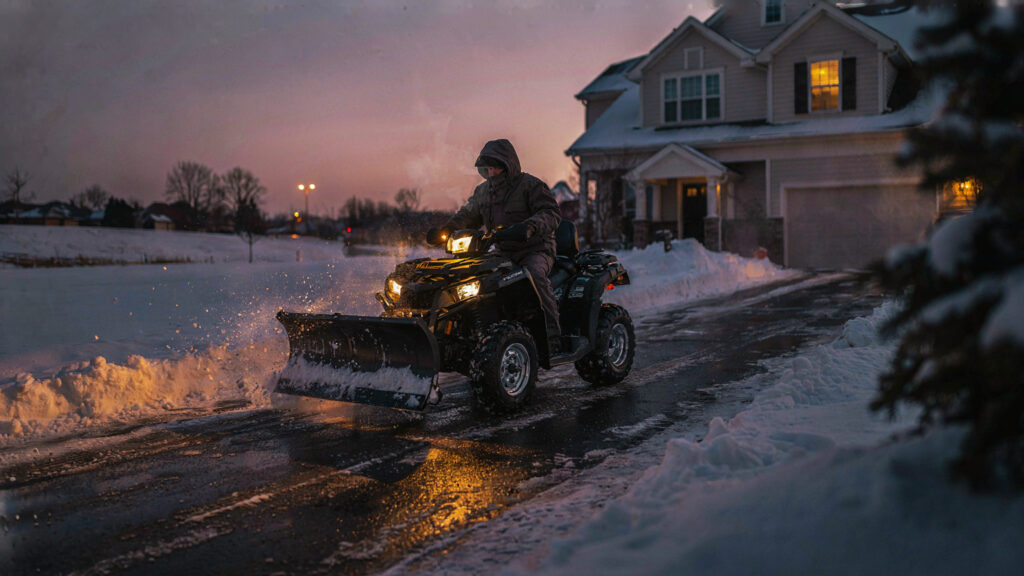
Two decisions matter more than brand when you put a plow on a quad or a side-by-side: whether the blade is wide enough for the machine underneath it, and how you intend to lift and angle it. Get the width wrong and you pack snow under your own tyres on every pass. Get the lift wrong and you spend the winter climbing off the machine to reposition a blade by hand.
This covers both, plus the question that comes before either — whether an ATV or a UTV is the right machine for the property you are clearing.
ATV or UTV: which actually plows better
A UTV plows better in almost every respect that matters. It is heavier, so it puts weight behind the blade instead of spinning; it has a wider stance, so it carries a wider blade without leaving tracks in the cleared lane; and it usually offers more ground clearance and a stronger charging system for a powered lift. That is why UTV plow systems are built around blades an ATV frame simply cannot carry.
An ATV still wins on three counts. It costs less, it fits through gates and between buildings a side-by-side cannot, and if you already own one the marginal cost is just the plow kit. For a single residential driveway under roughly 100 metres, a well-set-up ATV is not a compromise.
The honest dividing line is snow weight, not area. Wet, heavy, end-of-driveway plough-in defeats light machines regardless of blade width, because traction runs out before the blade does. If that is your typical event, weight is the specification to buy.
Sizing the blade
The governing rule is simple: the blade must be wider than the machine’s tyre track, measured at its widest point, so that angled plowing still clears a full path. Anything narrower and the tyres run over unplowed snow when the blade is angled.
| Machine width | Blade width | Notes |
|---|---|---|
| Standard ATV, around 50″ | 50″–55″ | 48″ only for narrow, older quads |
| Large ATV / small UTV | 54″–60″ | 60″ stays manoeuvrable in tight yards |
| Full-size UTV, 60″ or wider | 60″–72″ | 66″ and 72″ move materially more snow |
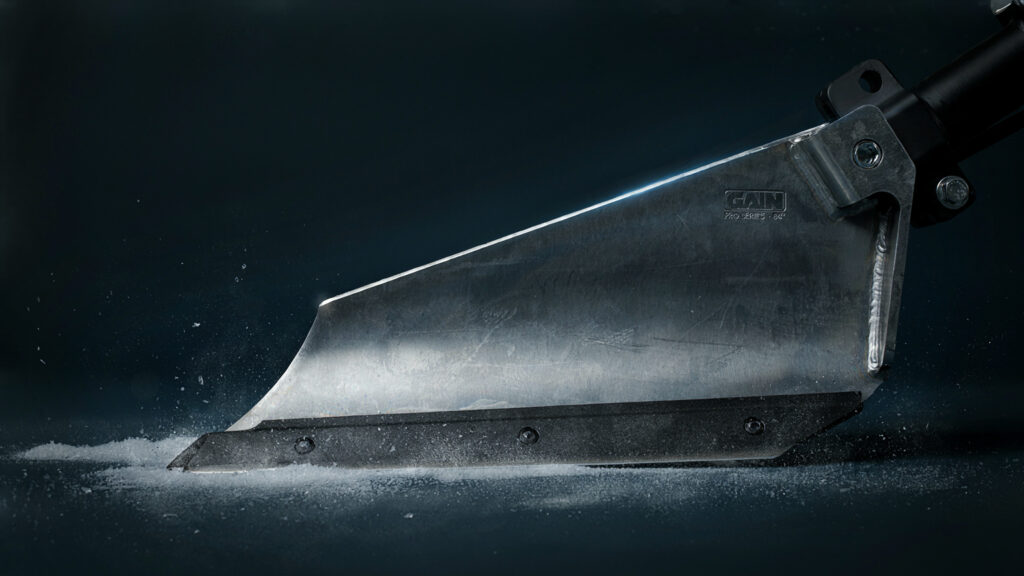
For reference, KFI splits its Pro-Series straight blades at exactly this boundary — 48″, 54″ and 60″ for ATVs, 66″ and 72″ for UTVs — in 11-gauge steel with a 16″ blade height. Most blades on the market fall between 16″ and 24″ tall, and height matters more than buyers expect: a short blade lets snow roll over the top once you are pushing a full windrow.
Wider is not automatically better. A 72″ blade on a machine that cannot push it simply stalls sooner, and it will not fit between a gatepost and a garage wall.
Straight, V, or flare
- Straight blade. The default, and the right answer for most driveways. Angles left or right to windrow, back-drags reasonably, costs least.
- V-blade. Splits into a wedge to break through drifts and scoops to carry snow. Worth it where you face drifting or need to stack. More money and more weight on the front end.
- Flare or county blade. Curved wings that roll snow further to the side on long straight runs. A niche choice for lanes, not driveways.
Mount systems: the part that is vehicle-specific
An ATV plow is three separate components, and only one of them is universal:
- The mount plate bolts to your machine’s frame and is model-specific. A plate for a Polaris Ranger will not fit a Kawasaki Teryx. This is the piece to confirm before anything else.
- The push tube or frame connects the plate to the blade. Usually brand-specific, sometimes shared across a manufacturer’s range.
- The blade itself, which within a brand is frequently interchangeable across widths.
Quick-attach systems — Kimpex’s Click N Go 2 among them — are designed to let you drop the plow in seconds without tools, which matters a great deal if the machine has a job in summer. If you leave the plow on all winter, a conventional pinned frame costs less and does the same work.
Lift and angle: three options
| System | How it works | Trade-off |
|---|---|---|
| Manual lift | Hand lever or foot pedal | Cheapest and most reliable; you stop and dismount constantly |
| Winch lift | Uses the machine’s existing winch | Most common setup; adds winch wear, and the blade drops under gravity rather than down-pressure |
| Electric actuator | Dedicated linear actuator | Cleanest operation and frees the winch; costs most, one more thing to fail in the cold |
Angle adjustment is a separate question from lift. Most kits angle by pulling a pin and repositioning the blade by hand. Powered angle — adjustable from the seat — is the single upgrade most owners of long driveways say they would buy first, because it is the movement you repeat most often.
One point about winch lifts that catches people out: because the blade lifts on a cable, it falls under its own weight. It cannot apply down-pressure, so hard-packed ice needs a heavy blade or a scraping edge, not more throttle.
Steel or poly
Steel blades are heavier, cheaper and scrape harder, which is what you want against packed snow. Poly blades are lighter, will not rust, and snow slides off them rather than sticking — noticeably better in wet snow near freezing. On a light ATV the weight difference cuts both ways: poly is easier on the front suspension but gives up some of the bite that weight provides.
Whichever you choose, a replaceable wear bar along the bottom edge is what saves the blade itself. Replace the bar, not the plow.
Fitting a Polaris Ranger or similar full-size UTV
Full-size utility side-by-sides are the most common plow platform sold, and the pattern is consistent: a 66″ or 72″ blade, a model-specific mount plate, and either a winch lift or an actuator. The two things worth checking before you buy are whether your machine’s charging system comfortably supports a powered lift alongside heated grips and lights, and whether your blade width clears the machine’s mirrors and cab when fully angled.
Frequently asked questions
What size snow plow do I need for my ATV?
Wider than your tyre track. A standard ATV around 50″ wide takes a 50″–55″ blade; machines 60″ or wider need 60″–72″. Measure your machine at its widest point rather than trusting the model name.
Is a UTV better than an ATV for plowing snow?
Yes, in most conditions. A UTV’s weight and wider stance let it push a bigger blade without losing traction. An ATV remains a sound choice for a single driveway, tight access, or where you already own the machine.
Do I need a winch to run an ATV plow?
Not necessarily. Winch lift is the most common arrangement because most machines already have a winch, but manual lift kits and dedicated electric actuators both work. An actuator keeps your winch free for its actual job.
Can an ATV plow handle the end-of-driveway ridge left by a road plough?
Sometimes, and it is the hardest thing you will ask of it. That ridge is compacted and often part ice. Take it in bites from the side rather than head-on, and expect a light machine with a poly blade to struggle where a heavier machine with a steel edge will not.
Will a plow mount from one machine fit another?
The mount plate will not — it is model-specific. Push frames are usually brand-specific, and blades are often interchangeable within a brand. When changing machines, budget for a new mount plate at minimum.
Kirk Davies
EditorialWith a career spanning over two decades in the snow and ice industry, and former owner of RWB Snow Service Group, Kirk propelled the company to the forefront of the industry while setting new standards for operational excellence and customer service. Kirk's contributions extend beyond his business achievements. He is a respected thought leader who shares his knowledge and insights throughout the snow and ice industry.
Price your next snow job in 60 seconds.
Estimate per-push, per-inch and seasonal pricing for any lot.