Pre-Treat, Monitor, Service, Document: The Ice Management Workflow
A four-phase ice management workflow that cuts material waste, defends slip-and-fall claims, and turns every winter event into a documented, repeatable operation.
Most commercial snow contractors know how to push snow and spread salt. Fewer have a structured, repeatable process that connects what happens before a storm to the paperwork that follows it. That gap is where money leaks out: wasted material, disputed invoices, and slip-and-fall claims that succeed not because the contractor failed to service the site, but because nobody can prove they did.
The fix is a four-phase workflow: pre-treat, monitor, service, document. Each phase feeds the next. Skip one and the whole chain weakens. Run all four consistently and you cut material costs, shorten response times, and build the kind of service record that holds up when an insurer or plaintiff’s attorney comes asking.
Phase 1: Pre-Treat Before the Event Arrives
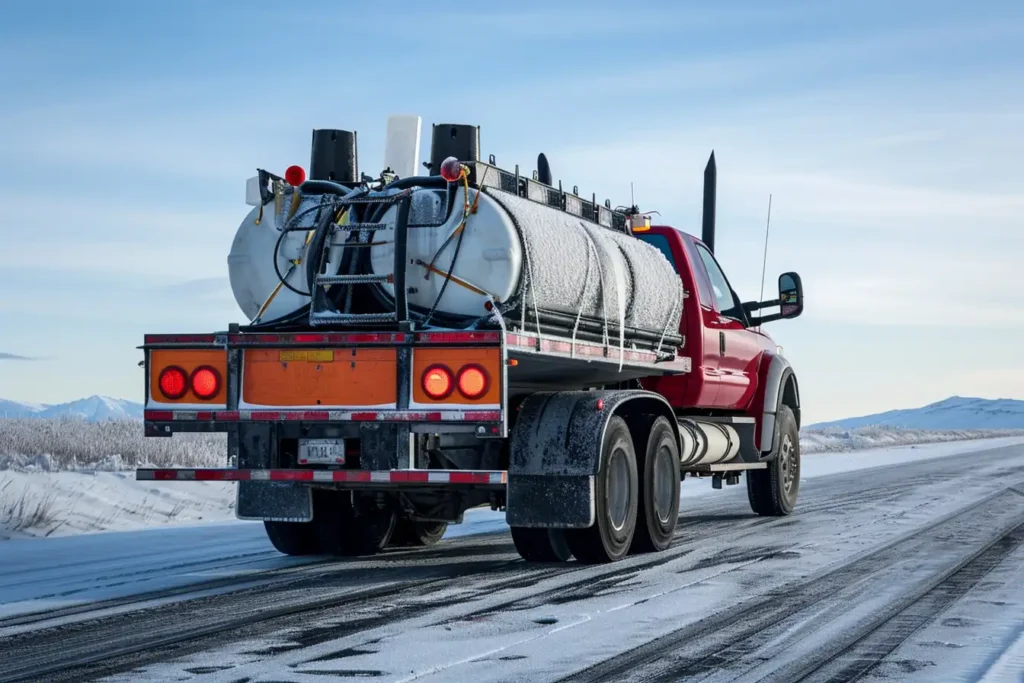
Pre-treatment, also called anti-icing, means applying liquid brine to dry pavement before precipitation arrives. The goal is to prevent ice from bonding to the surface in the first place, rather than breaking that bond after the fact.
The standard solution is 23.3% sodium chloride brine applied at roughly 44 gallons per lane mile for open roads, with parking lots scaled by area. According to the Missouri Department of Transportation’s anti-icing guide, anti-icing uses approximately one-quarter the material and one-tenth the cost of reactive de-icing. That math changes the economics of a seasonal contract.
There are limits. Sodium chloride brine needs the pavement surface to be above 15 °F to work effectively. Below that threshold, switch to calcium chloride or magnesium chloride blends. And brine washes off. If rain precedes the snow, or if application happens more than 12 hours before the event, the treatment may be gone before it matters.
When liquid-only application is not feasible, pre-wetting dry salt at 10–15 gallons per ton is the next-best option. Pre-wet salt sticks to the pavement instead of bouncing into the gutter, cuts scatter loss, and activates faster than dry granular material alone.
Conditions that defeat pre-treatment entirely:
- Rain before snow washes brine off the surface
- Pavement surface temperature below 15 °F (for NaCl)
- Application more than 12 hours before the event
- Fast-moving, high-accumulation storms that overwhelm a residual brine layer
Knowing when pre-treatment will not work is as important as knowing when it will. The decision feeds directly into the next phase.
Phase 2: Monitor Conditions in Real Time
SIMA’s glossary defines ice monitoring as “contractually agreed-upon site visits to check for ice accumulation.” In practice, monitoring means tracking conditions closely enough to deploy at the right moment, not too early, not too late.
What matters is pavement temperature, not air temperature. A parking lot can be 5–10 °F colder than the reading on a dashboard thermometer, especially on a clear night with radiative cooling. The tools that make monitoring actionable:
- Dashboard weather feeds: services like DTN or Weatherworks that provide hyperlocal precipitation timing and surface-temperature forecasts.
- On-site pavement sensors: embedded or portable sensors that report actual surface temperature at the lot level.
- Crew check-ins: timestamped photos from a driver doing a site pass. Low-tech but hard to dispute.
The trigger depth, the accumulation level at which you deploy, must be defined in the contract. Zero-tolerance sites (hospitals, distribution centres, 24-hour retail) get service at first measurable accumulation. A 2-inch trigger site gets plowed when snow hits 2 inches. The client agreed to that threshold when they signed; the monitoring record proves you met it.
Monitoring is not overhead. It is a billable service line. Price it in the contract alongside plowing and de-icing rather than absorbing it as an unrecoverable cost.
Phase 3: Service the Event
Dispatch and execution follow the level of service defined in the contract. A zero-tolerance lot gets a different response than a 2-inch trigger lot, and the crew needs to know which is which before the truck leaves the yard.
During the event, track three things:
- Which truck serviced which lot: if you run 10 trucks across 40 sites, you need to know who was where and when.
- What material was applied and how much: salt type, volume, application method. This is both an operational control (you cannot reconcile material inventory without it) and legal evidence.
- Every pass, timestamped and mapped: GPS route logging records when the truck entered the lot, what path it took, and when it left. This is not optional. It is the single most defensible piece of evidence in a slip-and-fall claim.
Mid-event decisions (when to re-plow, when to re-salt, when to call in additional crews) should follow pre-defined triggers, not gut feel. If the contract specifies maintaining bare pavement on a zero-tolerance site during a 6-inch storm, your SOPs should define re-service intervals (typically every 2–3 inches of accumulation or every 2 hours, whichever comes first).
Phase 4: Document Everything, Immediately
Documentation is where most contractors fail and where the most money is at stake. Industry data suggests that the majority of slip-and-fall claims against snow contractors are lost or settled not because the contractor did poor work, but because the contractor cannot prove what work was done.
The 24-hour rule: every service event gets a digital report submitted within 24 hours of completion. Not next week. Not at the end of the month. Within 24 hours, while the details are still accurate.
What the report includes:
- Weather conditions at time of dispatch (temperature, precipitation type, accumulation)
- Arrival time at the site
- Service actions performed (plow, salt, brine, sand, or combination)
- Materials applied, type and quantity
- Departure time
- Post-service site photo showing cleared conditions
GPS as proof of service
GPS route data is the backbone of defensible documentation. A timestamped route map shows exactly when the truck arrived, what path it took across the lot, and when it departed. That data, paired with weather records and a post-service photo, reconstructs the event completely.
There is a direct financial incentive: according to insurance industry guidance, GPS-tagged proof-of-service with photos can earn a 5–10% general liability premium credit. On a $30,000 GL policy, that is $1,500–$3,000 back, more than enough to cover the cost of a GPS tracking subscription.
Standards that formalise the expectation
The SIMA-10-2025 ANSI standard for procuring and planning snow and ice management services now requires GPS or electronic verification of services and specifies whether photo or video documentation is expected. It is the first national consensus standard to codify what insurers have been requiring informally for years.
SN 9001, SIMA’s quality management certification for snow and ice, centres its audit criteria on documentation practices. Contractors pursuing certification will find that the four-phase workflow maps directly to SN 9001’s requirements.
Retention
Keep records for at least the statute of limitations on premises liability in your state, typically 2 to 6 years. Store digital copies in a system that will outlast a single laptop. If a claim surfaces in year three and your records are on a hard drive that failed in year two, you have no defence.
Putting the Four Phases Together
The workflow is a cycle, not a checklist. Each event’s documentation feeds the next event’s pre-treatment decisions. Last Tuesday’s post-event photo shows where meltwater pooled and refroze. That is where you pre-treat first on Thursday. Last season’s material usage by lot tells you where to adjust application rates this year.
Crew training is the mechanism that makes the cycle hold. Everyone from the driver to the operations manager needs to know their role in each phase:
- Drivers own Phase 3 (execution) and the field components of Phase 4 (timestamped photos, confirming GPS is active).
- Dispatchers own Phase 2 (monitoring triggers) and Phase 3 (routing and re-deployment).
- The operations manager owns Phase 1 (pre-treatment scheduling), reviews Phase 4 documentation for completeness, and uses historical data to refine the workflow season over season.
Software platforms that integrate weather monitoring, dispatch, GPS tracking, and digital reporting exist and are worth evaluating. The right platform eliminates manual data entry and makes the 24-hour documentation rule automatic rather than aspirational. Evaluate based on whether the platform can produce a single, exportable service report per event per site. That report is the deliverable that matters.
Allan Robinson
EditorialThe Snow & Ice America editorial team tests and reviews plows, spreaders, and fleet tools with working contractors across North America. Independent. Never sponsored.
Price your next snow job in 60 seconds.
Estimate per-push, per-inch and seasonal pricing for any lot.