Best Snow Removal Equipment for Driveways and Long Drives
Almost every guide to driveway snow equipment is a ranked list of machines. That is the wrong shape for the decision, because the right machine is determined by your driveway,…
Almost every guide to driveway snow equipment is a ranked list of machines. That is the wrong shape for the decision, because the right machine is determined by your driveway, not by which model reviewed well. Four measurements decide it, and once you have them the field narrows to one or two options.
Measure these four things first
- Length and area. A 15-metre suburban drive and a 150-metre rural lane are different problems, not different sizes of the same problem.
- Surface. Gravel rules out an entire category of machine. Paved, sealed or stamped concrete changes which cutting edge you can use.
- Typical event depth. Not your record snowfall — the depth you actually clear most often. Buying for the once-a-decade storm is how people end up with a machine too heavy to manoeuvre for the other 95% of events.
- Slope and obstacles. An incline changes traction requirements, and a drive lined with beds and posts limits blade width regardless of what your machine could push.
The realistic options, compared
| Equipment | Suits | Snow depth | Gravel? | Main limitation |
|---|---|---|---|---|
| Shovel / snow pusher | Up to ~10 m, light snow | To ~15 cm | Yes | Physically demanding; slow above light accumulation |
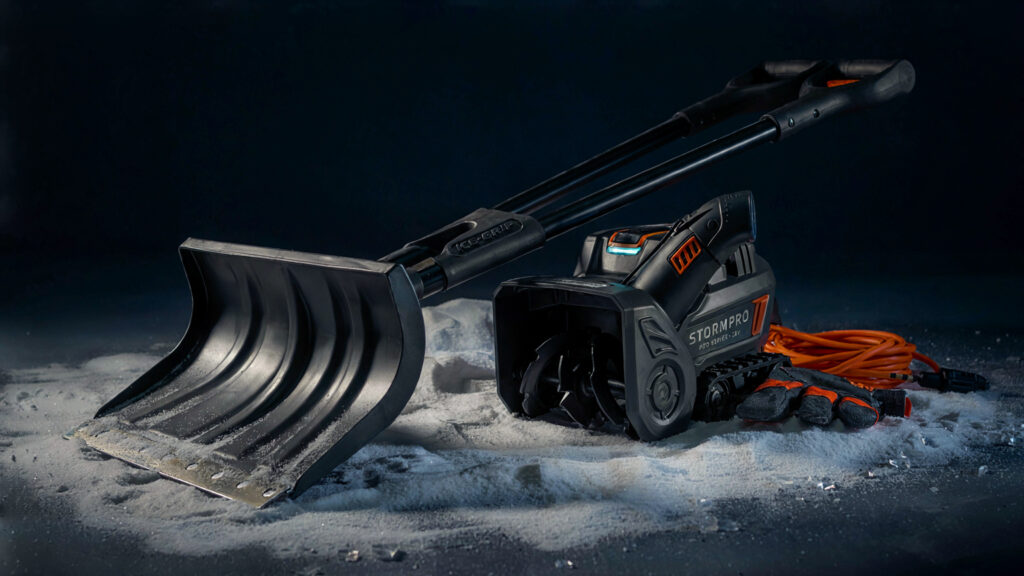
| Electric snow shovel | Paths, steps, small drives | To ~10 cm | No | Narrow clearing width; corded models limit range |
| Single-stage blower | Short-to-mid paved drives | To ~23 cm (9″) | No | Auger contacts the ground — paved surfaces only |
| Two-stage blower | Mid-to-long drives, any surface | To ~40 cm (16″) | Yes | Heavier, needs storage space, higher cost |
| Three-stage blower | Long drives, heavy wet snow | Deep, faster throughput | Yes | Most expensive; overkill for average snowfall |
| ATV / UTV with plow | Long drives and multiple properties | Depth-limited by traction | Yes, with care | You must already own or want the machine |
| Sub-compact tractor | Rural lanes, acreage | Very high with PTO blower | Yes | Cost; only justified if used year-round |
| Hiring a contractor | Any, where time or health decides | Any | Yes | Ongoing seasonal cost; timing not under your control |
Snow blower stages, and the one that matters for gravel
“Stages” describes how the machine moves snow, and it is the specification that most often gets bought wrong.
Single-stage
A rubber-tipped auger both collects snow and throws it, and it contacts the ground as it turns. That contact is what makes these machines light, cheap and effective at scraping a paved surface clean — and what makes them unsuitable for gravel, where the auger picks up stones and throws them. Expect a clearing path up to about 22″ and a working limit near 9″ of snow.
Two-stage
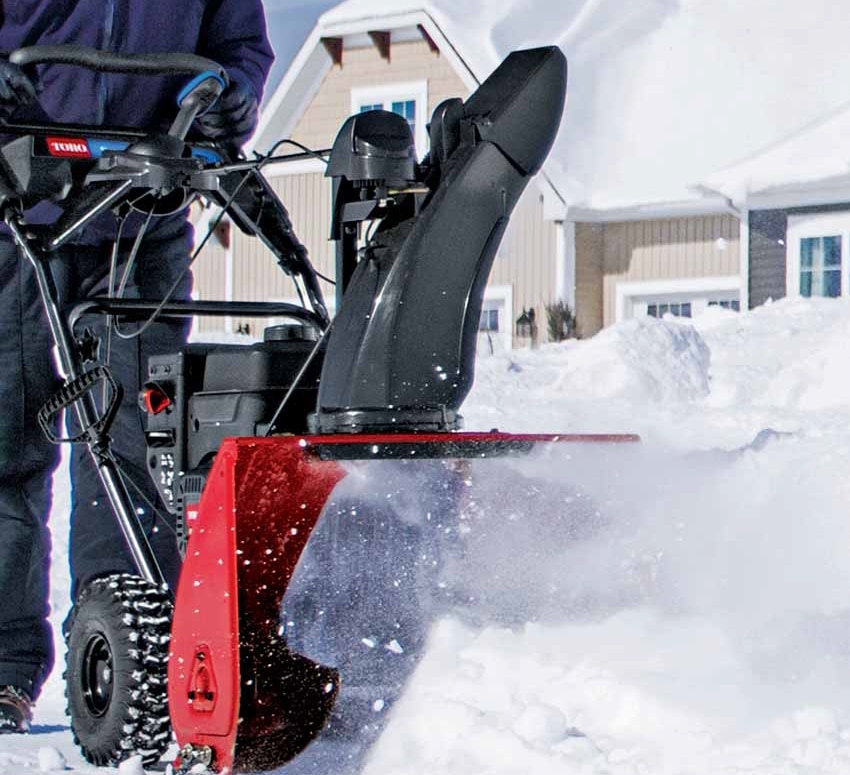
An auger gathers snow and a separate impeller throws it. Because the auger does not touch the ground, adjustable skid shoes let you run it over gravel, unsealed and uneven surfaces without picking up material. Two-stage machines handle roughly 16″ of snow and cope with wet, heavy accumulation that stalls a single-stage. For most driveways longer than a car length or two, this is the default answer.
Three-stage
Adds an accelerator ahead of the impeller to feed snow through faster. The gain is throughput on long drives and in heavy wet snow, not capability on surfaces a two-stage cannot already handle. Worth the money if clearing time is the constraint; otherwise it is a two-stage with a premium.
The short rule: gravel or uneven surface means two-stage at minimum. Family Handyman puts it plainly — a single-stage auger scrapes the ground, and on gravel that is exactly what you do not want.
Long driveways specifically
Past roughly 60–70 metres the calculation changes, because total clearing time starts to dominate every other consideration. Three things follow from that:
- Clearing width matters more than throw distance. A wider machine means fewer passes, and passes are what consume the morning.
- Where the snow goes becomes a design problem. On a long drive you cannot windrow indefinitely to one side; by the third storm the banks are too high to throw over. Plan a stacking point before winter.
- A riding machine beats a walk-behind on time, not on capability. A tractor-mounted blower or an ATV plow clears a long lane in a fraction of the time, which is why rural properties converge on them despite the cost.
If the drive is long and gravel — the most common rural combination — a two-stage blower with skid shoes set high, or a plow on a machine with weight behind it, are the two workable answers.
Gravel driveways
Gravel is the constraint that eliminates the most equipment. Beyond choosing two-stage or better, set the skid shoes so the auger housing rides roughly 1–2 cm above the surface, and accept that you will not get a bare-surface scrape the way you would on tarmac. Plowing gravel works reliably only once the ground is frozen; before that a blade digs in and drags stone onto the lawn.
When buying is the wrong answer
Equipment is not automatically the right purchase. Hiring makes more sense when your snowfall is infrequent enough that a machine sits unused most winters, when you have nowhere dry to store one, or when the physical demand is the actual problem you are solving. A two-stage blower plus fuel, servicing and storage is a multi-season commitment; in a marginal snow region the arithmetic often favours a seasonal contract.
Frequently asked questions
What is the best snow removal equipment for a long driveway?
For long paved or gravel drives, a two-stage or three-stage blower with the widest clearing path you can manoeuvre, or a plow on an ATV, UTV or sub-compact tractor. Clearing width and total time matter more than throw distance once the drive is long.
Can I use a snow blower on a gravel driveway?
Only a two-stage or three-stage. Their augers do not contact the ground, and adjustable skid shoes let you set a clearance above the stone. A single-stage will pick gravel up and throw it.
How deep a snowfall can a single-stage snow blower handle?
Around nine inches, with a clearing path up to about 22 inches. Beyond that, or in wet heavy snow, it bogs down and a two-stage is the appropriate machine.
Is a three-stage snow blower worth it over a two-stage?
Only if throughput is your constraint. A three-stage feeds snow faster and suits long drives and heavy wet accumulation, but it does not clear any surface a two-stage cannot. For average snowfall on a normal driveway it is a premium without a matching benefit.
Should I buy a plow or a snow blower for my driveway?
A blower removes snow from the property; a plow relocates it. On a short drive with somewhere to push, a plow is faster. On a long drive, or where banks build up with nowhere left to push, a blower keeps working all season where a plow eventually runs out of room.
Kirk Davies
EditorialWith a career spanning over two decades in the snow and ice industry, and former owner of RWB Snow Service Group, Kirk propelled the company to the forefront of the industry while setting new standards for operational excellence and customer service. Kirk's contributions extend beyond his business achievements. He is a respected thought leader who shares his knowledge and insights throughout the snow and ice industry.
Price your next snow job in 60 seconds.
Estimate per-push, per-inch and seasonal pricing for any lot.